Dev log
The Engines of Intelligence: A Practical Guide to AI Automation, Jobs and What Comes Next
Artificial intelligence is often discussed as though society must choose between two extreme conclusions.
One side argues that AI will eliminate most human jobs, concentrate power and make ordinary workers economically unnecessary.
The other side argues that AI is merely another tool, similar to a spreadsheet or search engine, and that concerns about automation are exaggerated.
The truth is likely more complicated.
AI can increase productivity, eliminate repetitive work, help smaller businesses compete and make valuable services more affordable. It can also reduce entry-level opportunities, compress teams, weaken traditional career paths and direct more wealth toward the owners of technology and capital.
These effects are not mutually exclusive. They can happen at the same time.
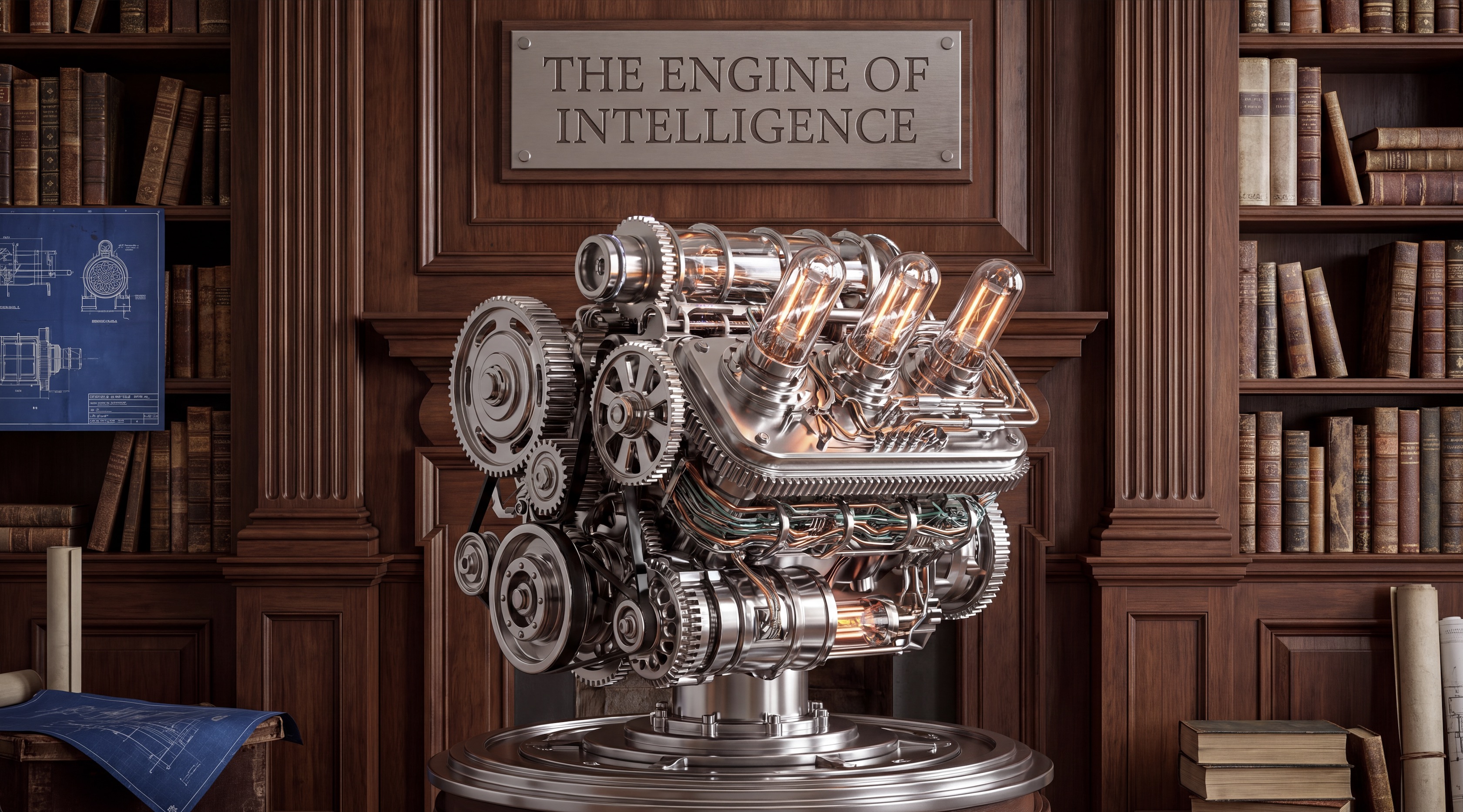
A useful way to understand this transition is to compare artificial intelligence to the development of the engine.
The major AI laboratories are building increasingly powerful engines of intelligence. They are improving the models’ reasoning, speed, memory, reliability, perception and ability to use tools.
But an engine does not determine what will eventually be built around it.
An engine can power a family car, tractor, ambulance, generator, cargo ship, race car or military vehicle. The same underlying source of mechanical power can produce radically different social and economic outcomes.
AI is similar. The foundation models are the engines. What businesses, governments, workers and entrepreneurs build around those engines will determine whether AI primarily expands human ability or simply reduces the cost of human labor.
AI Is Not Just Another Software Tool
Traditional software usually automates explicit instructions.
When a specific event happens, the software performs a predefined action.
For example:
* When a payment is received, update the account balance.
* When inventory falls below a threshold, send an alert.
* When a customer submits a form, add the information to a database.
* When a value changes, recalculate the spreadsheet.
These systems can be extremely powerful, but human beings must define the important rules in advance.
AI introduces a different kind of automation.
Instead of only following fixed instructions, an AI system can interpret unfamiliar information, recognize patterns, generate possible responses, recommend an action and sometimes execute a series of steps.
That means AI is beginning to automate portions of cognitive work.
A calculator automates arithmetic. A spreadsheet automates calculations and organization. Traditional design software automates many mechanical parts of visual production.
Generative AI can go further. It can draft the report, interpret the data, suggest a design, summarize the meeting, propose the next action and adjust its output after receiving feedback.
The system is no longer automating only the mechanical step. It is beginning to automate some of the judgment between the steps.
This is why AI feels more disruptive than many earlier software tools.
It is moving from something a worker operates toward something that can resemble a junior assistant, analyst, collaborator or autonomous operator.
The AI Companies Are Building Engines
The major AI companies are competing to build more capable foundation models.
Their competition includes:
* reasoning ability,
* processing speed,
* coding performance,
* multimodal understanding,
* reliability,
* context capacity,
* energy efficiency,
* privacy,
* autonomy,
* and cost.
Different models may serve different purposes.
One may resemble a high-performance racing engine: powerful but expensive.
Another may resemble a dependable truck engine: efficient, durable and suitable for large workloads.
A smaller model running locally may resemble a compact engine that provides less power but greater privacy and control.
There will probably not be one universal model that replaces every other model, just as there is no single engine that is ideal for every vehicle.
Businesses and individuals will choose models based on the work they need to perform.
But the engine itself is only one component.
The foundation model provides generalized cognitive power. It does not automatically know a company’s history, policies, products, customers, permissions or goals.
Those additional components form the rest of the vehicle.
The Complete AI Vehicle
A practical AI system can be understood through several connected parts.
The Foundation Model Is the Engine
The model provides the basic capacity to understand language, recognize patterns, generate content, reason through problems and interact with other tools.
The engine may be powerful, but it does not know where the organization wants to go.
Data Is the Fuel
A sophisticated model supplied with incomplete, inaccurate or outdated information will still produce unreliable answers.
Company records, policies, product information, customer history and operational data give the system useful context.
The quality and legality of that data matter. A company cannot assume that every piece of available information should be placed inside an AI system.
APIs and Tool Connections Are the Drivetrain
Connections allow the model to transfer its intelligence into action.
Through these connections, an AI system might:
* search a database,
* update a customer record,
* prepare a report,
* create a calendar event,
* check inventory,
* draft an invoice,
* or send information to another system.
Without these connections, the model may be intelligent but isolated.
Agent Systems Are the Transmission
An agent can break a larger objective into smaller steps.
For example, instead of merely answering a question, an agent might:
1. identify the necessary information,
2. search several systems,
3. compare the results,
4. prepare a recommendation,
5. request approval,
6. and perform the approved action.
The more actions an agent can take, the more important its permissions, limits and supervision become.
The Application Is the Vehicle
The same foundation model can be placed inside completely different products.
It may become:
* a tutor,
* a legal research assistant,
* a customer-service system,
* a design tool,
* a financial analyst,
* a scheduling assistant,
* or a scientific research platform.
Users do not experience the engine directly. They experience the vehicle built around it.
The Human Sets the Destination
Current AI systems can perform impressive work, but humans remain responsible for choosing goals, setting boundaries, evaluating risk and accepting accountability.
The system may recommend a decision. A person or institution must still determine whether that decision is appropriate.
Guardrails Are the Brakes and Steering
Power without control is not useful.
AI systems need:
* permission limits,
* activity logs,
* approval requirements,
* testing,
* error monitoring,
* escalation procedures,
* and the ability for humans to intervene.
An AI system should not receive unlimited access simply because it is capable of using a tool.
The Organization Is the Road System
A powerful vehicle performs badly on broken roads.
The same is true of AI inside a disorganized company.
If the company has contradictory rules, fragmented information and unclear responsibility, AI may not solve the underlying problem. It may simply accelerate the confusion.
This creates one of the most important principles of AI adoption:
> **AI does not automatically repair an organization. It amplifies the organization it enters.**
A disciplined company can become more efficient.
A careless company can produce errors faster.
A dishonest organization can automate deception.
A surveillance-focused employer can monitor workers more aggressively.
A worker-focused company can give employees far greater capability.
The values of the system do not come from the model alone. They come from the people, incentives and institutions surrounding it.
AI Usually Automates Tasks Before Entire Jobs
A job is rarely one activity.
A graphic designer does not merely generate images. The position may also involve research, communication, brand judgment, revision, file preparation and coordination with other departments.
A nurse does not only record symptoms. The work also includes observation, physical care, emotional support, communication and responsibility.
A manager does not only produce reports. The manager also resolves disagreements, sets priorities, evaluates people and accepts accountability for decisions.
AI may automate several tasks within these occupations without replacing the complete role.
This is why the distinction between a task and a job is so important.
Current research generally supports the conclusion that AI exposure is widespread, but exposure does not automatically mean elimination.
The International Labour Organization has estimated that roughly one-quarter of global employment exists in occupations with some exposure to generative AI. However, only a much smaller percentage falls into the highest exposure category.
The ILO’s broader conclusion is that job transformation is more likely than complete replacement in many occupations because human involvement remains necessary.
That does not mean disruption will be minor.
Even when an occupation survives, the daily work, number of employees and path into the profession may change significantly.
Graphic Design Shows What Job Transformation Looks Like
Graphic design offers a useful example.
A traditional design process might include:
1. researching references,
2. sketching concepts,
3. creating compositions,
4. sourcing or photographing elements,
5. illustrating,
6. retouching,
7. preparing variations,
8. revising the design,
9. and delivering production files.
AI can compress several of these stages.
A designer may now begin with generated concepts instead of a blank canvas. The designer then selects, edits, combines, corrects and directs the output.
The role moves away from producing every element manually and toward:
* art direction,
* visual judgment,
* editing,
* consistency,
* brand strategy,
* quality control,
* and final decision-making.
For an experienced designer, this can be a major advantage.
The designer already understands typography, composition, color, hierarchy, branding and client psychology. AI allows that knowledge to be applied more quickly.
But the same transition creates a difficult question:
> How does a beginner become experienced when the machine performs much of the basic production work through which experience was traditionally developed?
A junior designer may produce polished-looking images without understanding why one composition works better than another.
AI can raise the quality floor while weakening the path through which people learn the craft.
This problem will not be limited to design.
It may also appear in:
* programming,
* accounting,
* law,
* marketing,
* consulting,
* journalism,
* finance,
* and research.
The Broken-Ladder Problem
Many professional careers rely on an informal apprenticeship structure.
Beginners start with smaller or more repetitive responsibilities. Over time, they learn the patterns behind the work and receive more complex assignments.
A junior lawyer reviews documents before leading a case.
A junior programmer fixes simple problems before designing major systems.
A young accountant prepares reports before advising executives.
A beginning designer produces basic assets before directing a campaign.
Some of this work is tedious. However, it also builds pattern recognition and judgment.
If AI performs most junior-level work, companies may keep experienced employees who can supervise the systems while hiring fewer beginners.
That produces short-term efficiency but creates a long-term problem.
An organization cannot permanently rely on senior experts if it stops creating new experts.
Research from the Stanford Digital Economy Lab has provided early evidence of this risk. Its analysis found relative employment declines among workers aged 22 to 25 in several highly AI-exposed occupations.
The findings do not prove that AI caused every decline, but they raise a credible warning: the earliest employment effects may appear through reduced hiring and weaker entry-level opportunities rather than obvious mass layoffs.
This means society needs to redesign apprenticeship.
The answer is not to preserve meaningless repetitive work forever. It is to make sure beginners still learn the underlying process.
Possible approaches include:
* supervised AI use,
* simulations,
* deliberate practice,
* review of intermediate reasoning,
* manual exercises,
* rotational assignments,
* and formal mentorship.
The goal should be to remove unnecessary labor without removing the experiences that create competence.
Five Stages of AI Automation
AI adoption will probably move through several overlapping stages.
Stage One: Task Removal
The first stage eliminates repetitive parts of an existing position.
Examples include:
* summarizing meetings,
* formatting reports,
* entering information,
* generating routine variations,
* retrieving records,
* or preparing a first draft.
This stage is often welcomed because employees already have more work than time.
The automation removes a backlog rather than removing the employee.
Stage Two: Role Compression
One person begins performing responsibilities that previously required several people or specialties.
A marketer may research, write, design and analyze.
A programmer may also handle documentation, testing and portions of product planning.
A small-business owner may perform work that previously required several outside contractors.
At this stage, companies may not lay off large numbers of workers. Instead, they grow without hiring as many new employees.
This makes the effect harder to see.
No existing worker receives a termination notice. The missing jobs are positions that would have been created under the old system.
Stage Three: Organizational Redesign
Companies eventually stop adding AI to old processes and begin rebuilding the processes around AI.
Instead of asking:
> “How can AI help our customer-service employees?”
The organization asks:
> “What should customer service look like if AI resolves common issues and humans handle only unusual or high-risk cases?”
This stage can produce larger efficiency gains because the entire workflow changes.
It also creates greater displacement risk because the company is no longer automating one task. It is changing the structure of the department.
Stage Four: Demand Expansion
Lower costs can create new demand.
A service that was once too expensive for most people may become widely available.
A small company may gain access to advanced analysis.
A student may receive personalized tutoring.
A local business may offer professional design, translation or customer support.
This creates an important economic question.
If AI reduces the labor required to provide a service, will demand grow enough to offset the reduction?
Suppose AI makes a service 80 percent cheaper.
If demand remains unchanged, fewer workers may be required.
If demand increases tenfold, the industry may still employ more people overall.
Productivity does not automatically destroy employment. The outcome depends partly on how customers respond to lower costs and greater availability.
Stage Five: New Industries
The largest economic effects may come from products and industries that do not yet exist.
The automobile did more than replace horse-drawn transportation.
It helped create:
* modern logistics,
* roadside businesses,
* automobile insurance,
* suburban development,
* large-scale commuting,
* repair industries,
* and new forms of travel.
AI may also create industries that cannot be understood merely as automated versions of existing work.
This is why forecasts based entirely on current job descriptions are incomplete.
They measure what AI might do to today’s economy. They cannot fully measure what people may create once cognitive capability becomes cheaper and more abundant.
What New AI Vehicles May Be Built?
Several categories appear increasingly plausible.
Cognitive Exoskeletons
AI assistants may become persistent systems that operate across a person’s work.
Instead of opening a chatbot for isolated questions, the assistant may remember decisions, recognize patterns and prepare the next action.
A salesperson could be reminded about a commitment made months earlier.
A construction manager could be warned about scheduling conflicts.
A business owner could ask why profit margins changed and receive an analysis connected to actual company records.
The system would function as an external layer of memory and coordination.
One-Person Companies
A capable person may use AI to coordinate research, sales, customer support, design, bookkeeping and software development.
The human would still provide:
* goals,
* judgment,
* taste,
* relationships,
* capital allocation,
* risk tolerance,
* and accountability.
AI would supply scalable cognitive assistance.
This could allow more people to start companies that once required large teams.
It could also mean that successful businesses create fewer traditional jobs.
Again, the same development can produce benefits and costs.
Autonomous Back Offices
Routine operational work may increasingly run in the background.
AI systems may continuously monitor:
* expenses,
* inventory,
* schedules,
* compliance,
* documentation,
* and customer records.
Humans would handle disputes, unusual cases and policy decisions.
The safest versions will operate inside strict boundaries. They will have transaction limits, permission levels, logs and clear escalation procedures.
Personalized Education
AI tutors may adapt explanations, pacing and exercises to each student.
Teachers could spend less time delivering the same information repeatedly and more time on mentorship, motivation and diagnosis.
But institutions could also use AI mainly to reduce staffing and costs.
The technology does not decide whether the result is better education or cheaper education. The institution decides.
Living Software
Most software forces users to learn menus, screens and workflows.
AI-native software may reorganize itself around the user’s goal.
Instead of navigating through an accounting system, a business owner might ask:
> “Why did our margins decline last quarter, which customers were affected and what should we investigate?”
The system could gather the information, construct the analysis and present the evidence.
Software may become less like a fixed collection of screens and more like an adaptable interface that builds temporary workflows around a problem.
Coordination Engines
Many organizations do not fail because nobody has the necessary information.
They fail because:
* information is fragmented,
* responsibilities are unclear,
* departments misunderstand one another,
* decisions arrive too late,
* and follow-up actions disappear.
AI may become the connective tissue that maintains context, routes exceptions and makes responsibility visible.
Some of the greatest opportunities may not come from replacing individual workers. They may come from eliminating the gaps between workers, departments and systems.
The Benefits of AI Automation
There is a strong moral and economic case for automation.
Some work is:
* repetitive,
* dangerous,
* physically exhausting,
* emotionally draining,
* degrading,
* or unnecessarily slow.
Society does not normally preserve avoidable suffering simply because eliminating it changes a job.
Few people would argue that accountants should manually add thousands of numbers to protect arithmetic work.
Few would demand that employees enter the same information into several databases when the systems could communicate automatically.
AI can also expand access to expertise.
A small business may obtain analytical capabilities that were previously affordable only to a large corporation.
A person with limited technical training may build useful software.
A student may receive individualized instruction.
A person with a communication disability may produce clearer written work.
Translation, research and basic professional assistance may become available to more people.
The greatest benefit may not be producing the same amount of work with fewer people.
It may be allowing society to attempt much more work.
A company could serve ten times as many customers.
A scientist could test more hypotheses.
A teacher could provide individualized support.
A small organization could compete in markets that were previously inaccessible.
Automation can expand human ambition by reducing the cost of trying.
The Risks of AI Automation
The gains from AI will not distribute themselves automatically.
When an employee becomes twice as productive, there is no natural rule requiring the company to double that person’s pay or reduce the workweek.
The employer may simply expect twice the output.
AI may democratize access to capability while concentrating ownership of the infrastructure, models, data and distribution systems.
There is also a risk that workers become permanent reviewers of machine-generated output.
Reviewing can be valuable work, but not everyone will find it satisfying.
A designer may spend more time correcting generated content and less time creating.
A writer may become an editor of machine-produced paragraphs.
A programmer may supervise code created faster than anyone can thoroughly understand it.
Skills may weaken when people stop practicing the underlying craft.
A person who never writes without assistance may struggle to reason through writing.
A programmer who never builds basic components may misunderstand system architecture.
A designer who never works through composition may develop preferences without developing deep ability.
AI also creates major surveillance risks.
Employers may use it to:
* analyze communications,
* score employee performance,
* monitor behavior,
* measure productivity,
* predict resignations,
* or enforce narrow definitions of acceptable work.
A technology that could free people from mechanical tasks could instead be used to make people behave more mechanically.
Finally, society must avoid confusing economic value with human value.
Even if AI becomes better than humans at many commercial tasks, that does not make human lives meaningless.
Markets measure demand and scarcity. They do not measure the full value of:
* parenthood,
* friendship,
* love,
* citizenship,
* courage,
* sacrifice,
* play,
* or human experience.
The statement “a machine can perform this job” must never become “the person who performed it has no value.”
Is Automating a Job Morally Wrong?
Not necessarily.
The moral question cannot be answered by asking only whether labor was eliminated.
It is also necessary to ask:
* What kind of labor was removed?
* Who received the benefit?
* Who absorbed the disruption?
* Was the worker given a path into the new system?
* Was the automation used to expand capacity or only reduce payroll?
* Can errors be challenged?
* Was a meaningful human relationship replaced merely because imitation was cheaper?
* Would the organization explain the system honestly to affected workers?
An automation that removes dangerous inspection work is different from one that removes human care from a vulnerable patient.
A system that helps an employee gain responsibility is different from one secretly designed to measure the employee until replacement becomes possible.
Automation becomes morally questionable when the organization keeps all the gains while transferring all the costs to the people with the least power.
A Practical Framework for Making Better Decisions
Before implementing an AI system, organizations should examine seven areas.
1. Define the Exact Task
“Automating the department” is too broad.
“Generating first drafts of weekly reports” is specific.
The smaller and clearer the unit of automation, the easier it becomes to measure benefits and identify risks.
2. Decide What Happens to the Worker
Saving time is not a complete plan.
What will the employee do with the saved time?
Will the person manage more customers, improve quality, solve harder problems, learn new skills or take responsibility for the system?
Without a clear answer, “freeing the employee” can quietly become “making the employee unnecessary.”
3. Distinguish Augmentation From Substitution
An AI tool that drafts a reply for an employee is primarily augmentative.
A system that resolves the case without an employee is more substitutive.
Neither is automatically right or wrong, but the organization should be honest about which one it is building.
4. Preserve Accountability
When the system makes a mistake, someone must be responsible.
This is particularly important in decisions involving:
* employment,
* health,
* money,
* legal rights,
* safety,
* or reputation.
“AI made the decision” is not a valid accountability structure.
5. Protect the Learning Path
Organizations should determine how junior workers will gain expertise.
They may need supervised AI use, manual exercises, simulations, mentoring and access to the intermediate steps behind the output.
Efficiency today should not eliminate expertise tomorrow.
6. Share the Productivity Gain
Benefits can be shared through:
* better pay,
* reduced workload,
* flexible schedules,
* promotions,
* training,
* bonuses,
* or profit sharing.
Employees are more likely to support an AI system when they can see a future for themselves inside the new organization.
7. Make the System Explainable
Organizations should be able to explain:
* what the system does,
* what information it uses,
* what decisions it affects,
* how performance is measured,
* and how errors can be challenged.
If secrecy is required for the system to feel acceptable, that is a warning sign.
A useful operating principle is:
> **Automate the burden first. Augment the person second. Replace a position only when the wider benefit is substantial and the transition is handled honestly.**
What Will Probably Happen to Work?
The most likely near-term outcome is not universal job extinction.
It is widespread job mutation.
The areas likely to experience the greatest pressure include:
* repetitive digital work,
* clerical coordination,
* basic content production,
* routine customer support,
* standardized analysis,
* and certain entry-level knowledge roles.
Work built around judgment, physical presence, trust, relationships, responsibility and complex local knowledge will generally be harder to automate completely.
The central divide may not be between people who use AI and people who refuse it.
It may be between:
> **People who can direct systems, evaluate results and own outcomes, and people whose work consists mainly of producing standardized outputs.**
The first group will gain leverage.
The second group will face increasing pressure as AI becomes more reliable.
However, technical capability alone will not determine the final outcome.
Adoption will also depend on:
* law,
* liability,
* cost,
* infrastructure,
* customer trust,
* worker resistance,
* organizational culture,
* and human preference.
A restaurant may be capable of automating every interaction and still discover that customers want hospitality.
A school may automate content delivery and still need mentorship.
A company may automate analysis and still need someone willing to make and defend the final decision.
Technical possibility does not automatically produce social acceptance.
The Choice Is Not Humans or Machines
The AI engine is morally flexible.
It can power systems that educate, heal, create and expand opportunity.
It can also power systems that exploit, monitor, deceive and concentrate control.
The values appear in what is built around the engine:
* who owns it,
* who benefits,
* who accepts the risk,
* what rules govern it,
* and how people are treated during the transition.
The best AI systems will not merely allow a company to say:
> “We can now operate with fewer employees.”
They will allow the company to say:
> “The same people can now operate a far more capable organization, solve larger problems and share in the value they create.”
That result is possible, but it is not guaranteed.
The major AI companies are building engines of intelligence.
The rest of society is building the vehicles, roads, institutions and rules around them.
The future of AI will not be determined only by how intelligent the models become.
It will be determined by what people choose to build with that intelligence—and whether those systems expand human capability or merely make human labor cheaper.